LeonardoFrigo
About
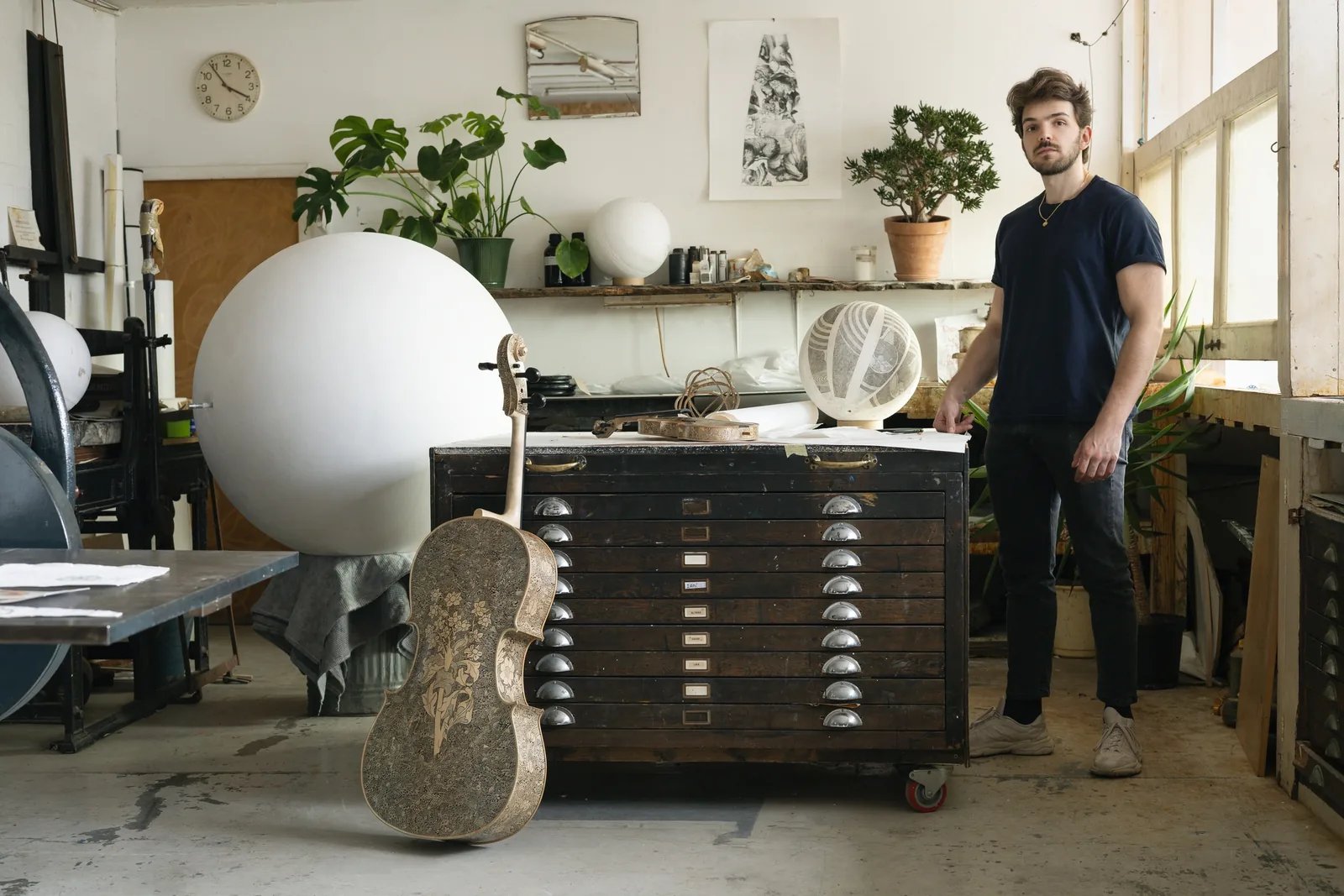
Leonardo Frigo is an Italian artist and globe maker. Trained in art restoration in Venice, his practice brings together historical research, drawing and the discipline of making by hand.
His work explores the meeting point between cartography, art and cultural memory, transforming centuries-old knowledge into objects made for the present.
A foundation in restoration
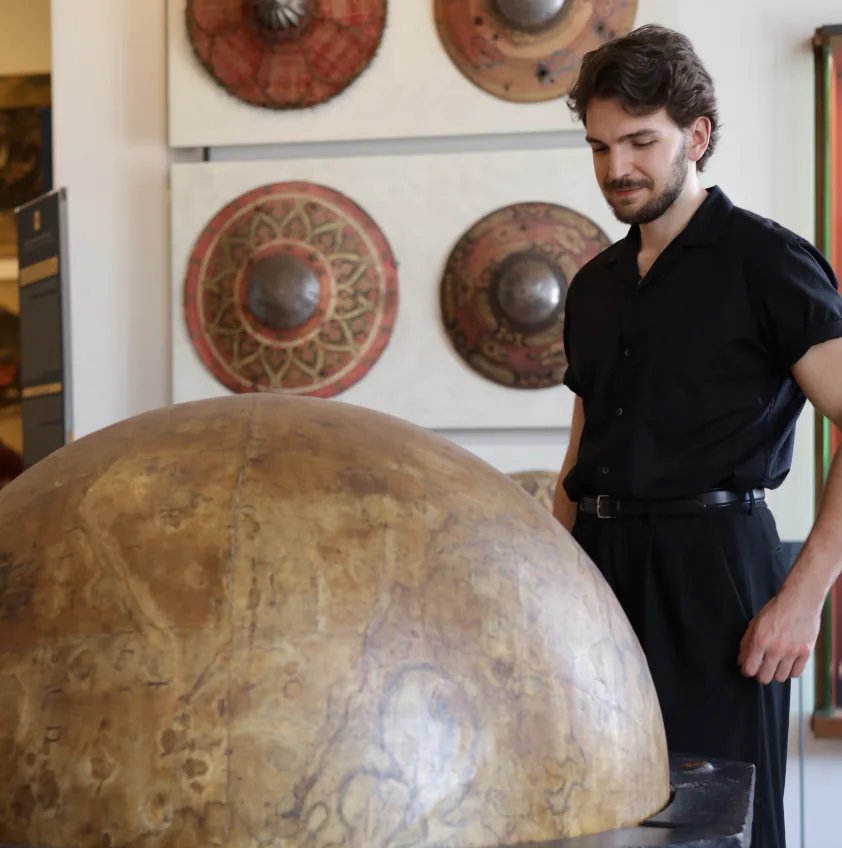
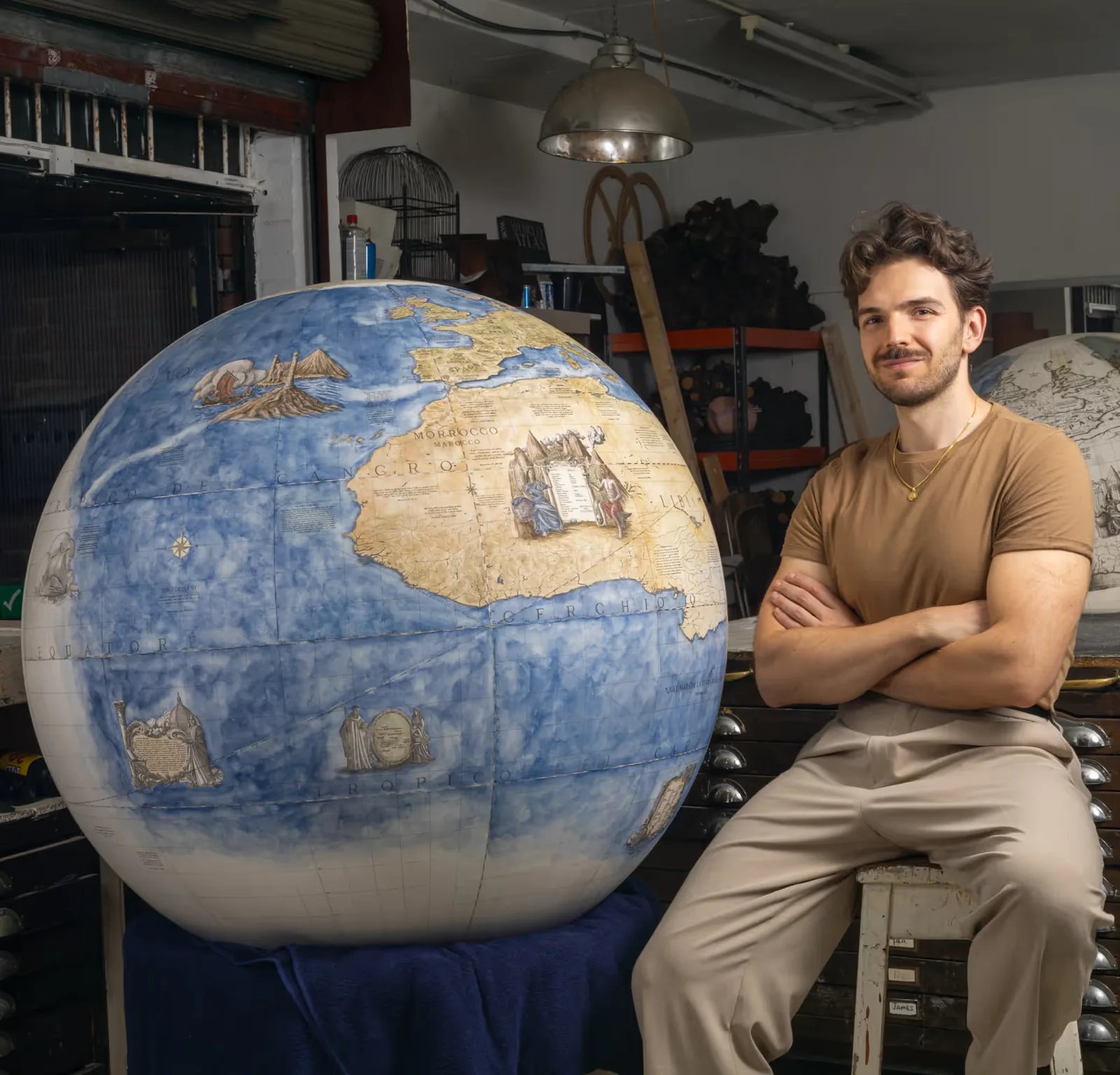
Leonardo trained in art restoration in Venice, developing a close understanding of materials, surfaces and historic techniques. Restoration taught him to understand an object from the inside out: how it was constructed, how materials behave and how knowledge can survive through making. That way of looking continues to guide every work produced in the studio.
From DanteTo the Globe
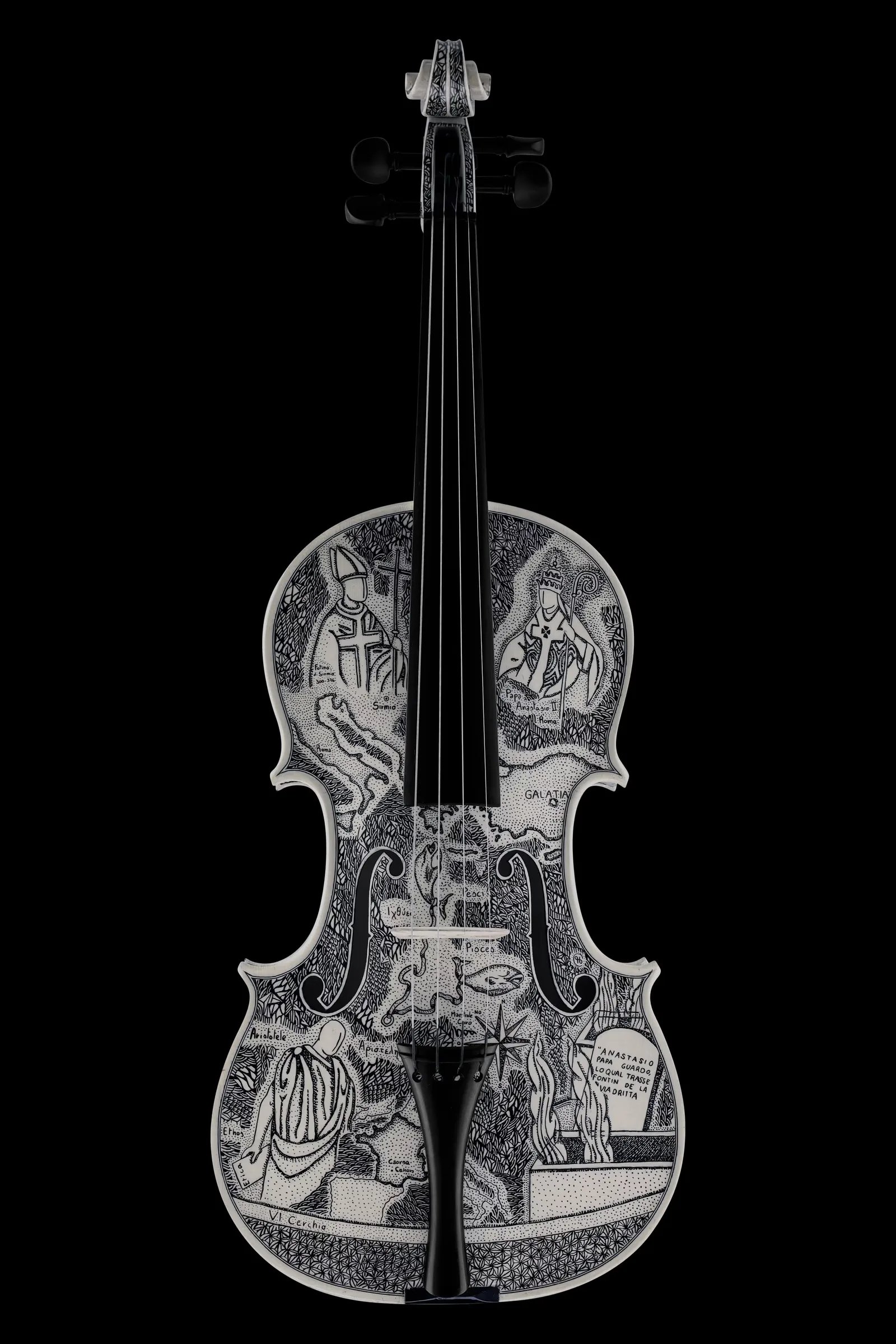
Before turning to the sphere, Leonardo spent five years creating Infernus, a cycle of 33 violins and one cello inspired by the 34 cantos of Dante's Inferno. Each instrument became a surface for storytelling, hand-painted with characters, symbols and episodes drawn from the poem.
The project established an approach that continues throughout his work today: research becomes drawing, and drawing becomes an object. The study of Dante gradually led from literature to cartography — and from cartography to the globe.

The Atelier
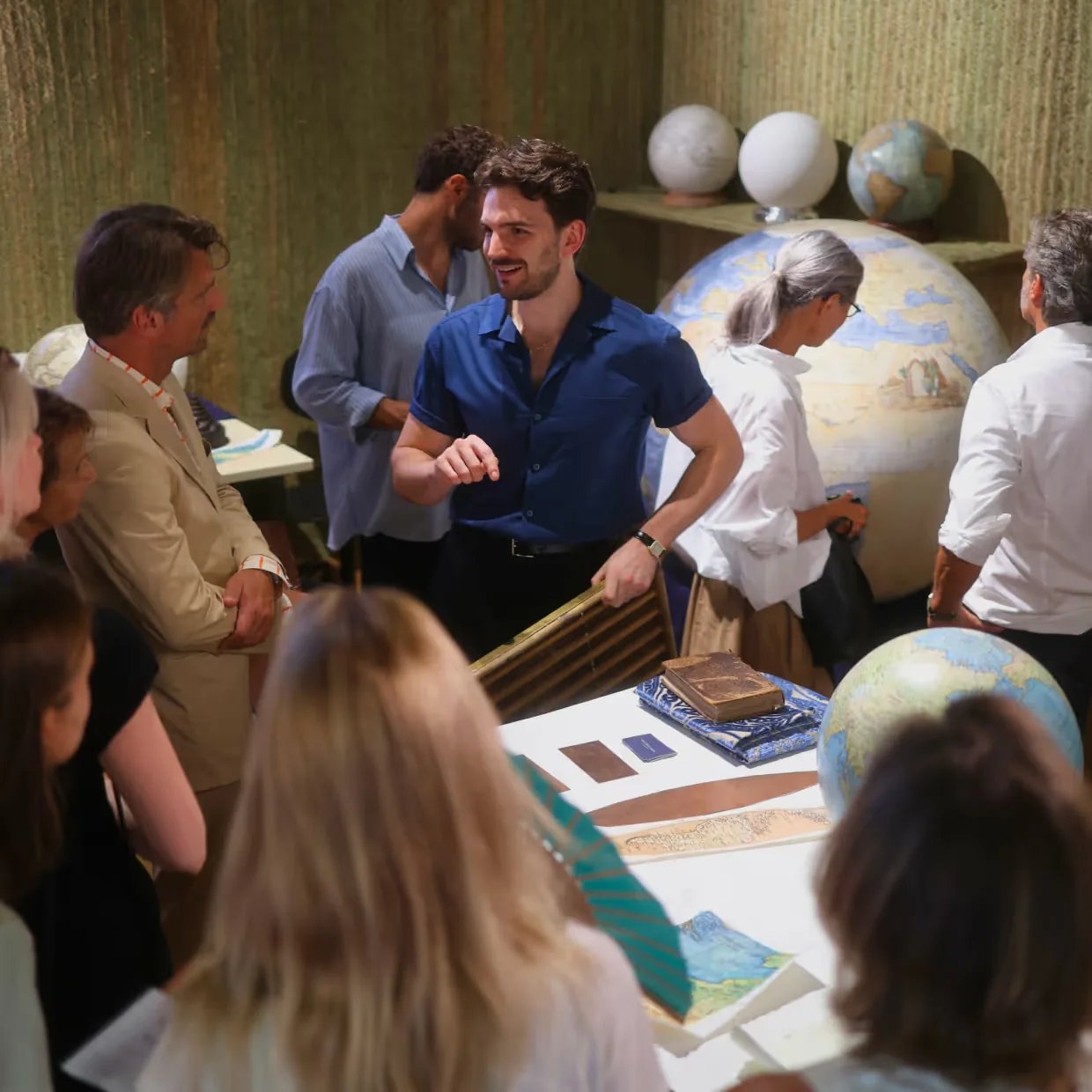
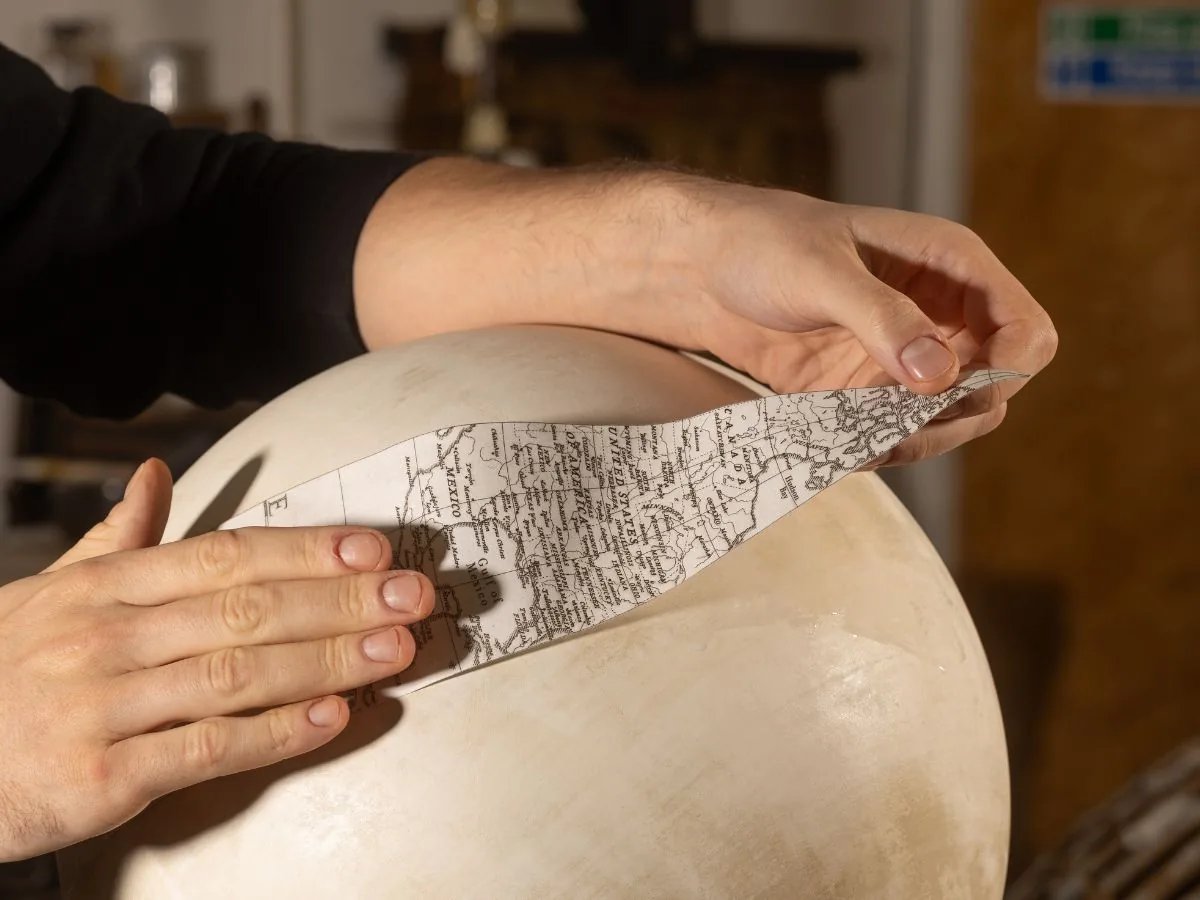
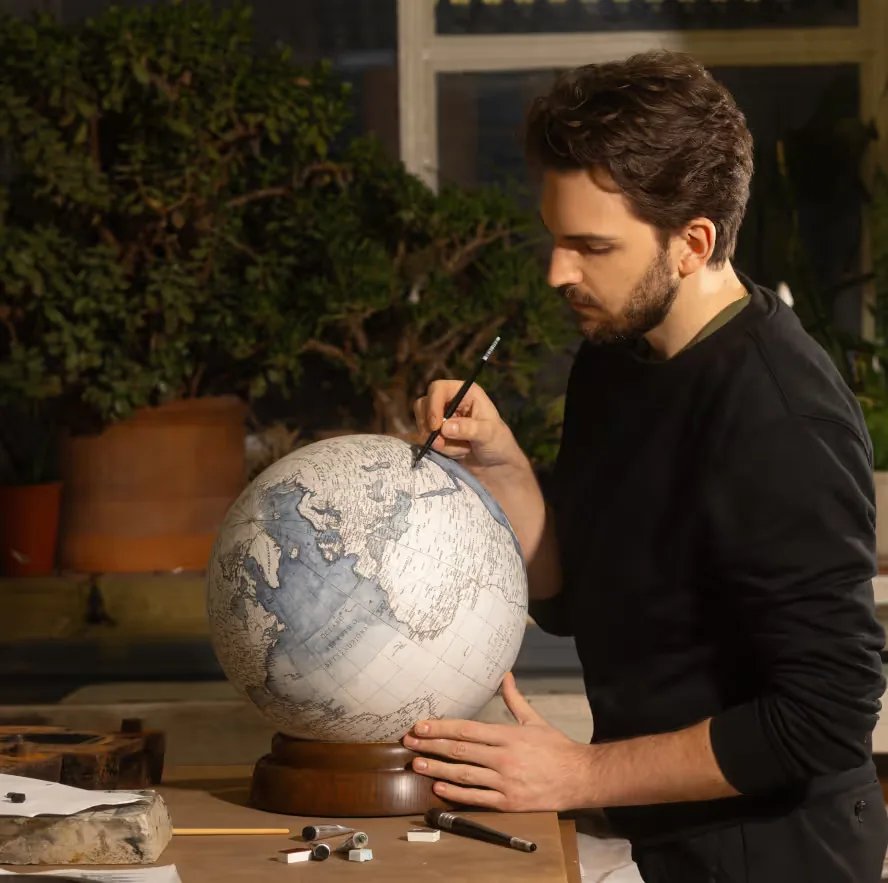
Inspired by the methods described by the seventeenth-century Venetian cosmographer and globe maker Vincenzo Coronelli, every globe is built entirely by hand in the studio, from the construction of the sphere to the final painted and gilded details. Drawing, cartography, copper-plate etching, hand printing, watercolour, gilding and traditional construction come together within a single practice. The historic techniques are not used to reproduce the past, but as the foundation for new terrestrial and celestial works, each developed slowly through research, material and the hand of the maker.